
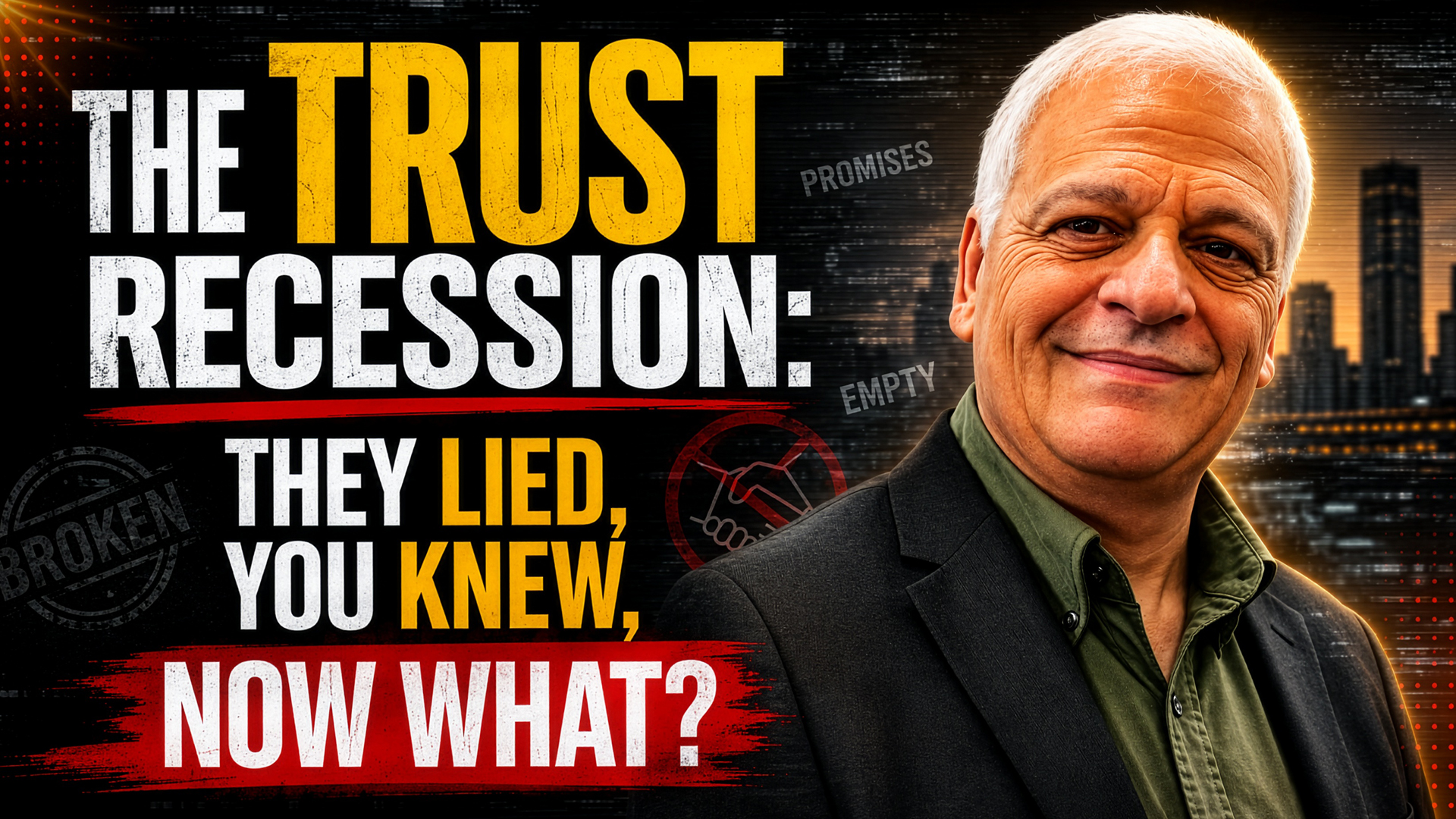
Watch or Listen to this Episode Now
The Trust Recession: They Lied, You Knew, Now What?
Yesterday, the man who spent years telling an entire nation to “trust the science” sat down in front of the United States Senate — and refused to answer a single question. After more than 250 appearances before Congress, Dr. Anthony Fauci pleaded the Fifth. And whatever you think of the man, that moment is the perfect snapshot of something I’ve been watching build for years: we are living through the trust recession.
When the Experts Went Silent
Let me say plainly what a lot of people are thinking. When someone spends years demanding your trust, your compliance, telling you he is the science — and then, the moment he’s finally asked to account for it under oath, he goes quiet — that tells you something. That tells you a lot.
Is pleading the Fifth a right? Absolutely. Every American has it, and we should be grateful we do. But this wasn’t a private citizen caught off guard. This was the most powerful public health official of our lifetime, sitting on a thousand pages of his own private pandemic diaries that Senator Rand Paul just put on the table — with a contempt of Congress vote coming next week. A man who had all the answers for the rest of us suddenly had none for himself.
And here’s the thing: this was never really about one man in a suit. It’s about what he represents. For years we were told to sit down, be quiet, and trust the experts, the institutions, the people in charge — because they knew better than we did. Millions of us had honest questions, and we were treated like we were crazy for asking them.
What the Trust Recession Really Is
Look around now. This is what I call the trust recession, and it’s bigger than any single hearing. Ask yourself honestly: who do you actually believe anymore? The government? The media The experts who were so certain, right up until they were wrong?
Trust in our institutions has been sliding for years, and this Fauci hearing is a symptom, not the cause. That trust didn’t simply evaporate. It was spent — burned by people who treated your faith in them as something they were owed rather than something they had to earn.
A society runs on trust the way an engine runs on oil. When you run low, the machine still moves for a while — but you can hear it grinding. You can feel it grinding. That grinding is the sound of the trust recession, and it changes how every one of us has to operate, whether you’re running a household or running a company.
How to Think for Yourself in a Low-Trust World
So what do you do about it? Here’s the good news: the answer isn’t to believe no one. Pure cynicism is just as lazy as blind faith. The answer is to build your own filter.
When you hear a claim, run it through three quick questions. Who is telling me this? What do they get if I believe it? And have they been right before? Follow the incentive and check the track record, and most of the noise sorts itself out.
Then watch out for the tribe trap. The most comfortable information is always the stuff that flatters what you already believe — but comfort is not the same thing as accuracy. Skepticism isn’t cynicism. Cynicism believes nothing and does no work. Skepticism rolls up its sleeves and finds out. In the middle of the trust recession, that willingness to do the work is a superpower.
And protect your peace while you’re at it. You can stay informed without being enraged twenty-four hours a day. Curate your inputs on purpose.
Why Trust Is Now Your Most Valuable Business Asset
Now here’s the flip side, and this one is for the builders and the leaders in the audience. In a world where people believe no one, the person they do believe wins everything. That makes trust the rarest and most valuable asset you can offer.
Transparency is the strategy. The Fauci diaries are the lesson in miniature — what leaders hide tends to surface. So say the hard thing first, before someone else says it for you. Consistency compounds: trust is built in drips and lost in buckets, so do what you said you’d do, every single time, especially when it’s inconvenient. And when you get it wrong, own it fast. The brands and founders who admit mistakes out-earn the ones who spin them.
There’s an AI angle here too. In an age where anyone can fake content, being verifiably, consistently you is a moat. Authenticity has quietly become a competitive advantage.
Good Times, Bad Vibes: Trust Your Own Eyes
The trust recession doesn’t stop at politics. It’s in your wallet, too.
Read this week’s headlines and the economy is booming: jobless claims at their lowest level since 1969, solid GDP, the Fed looking around and deciding everything is fine. By every official number, we’re living in good times. So why does nobody feel it?
Because I talk to real people every day, and I don’t hear “booming.” I hear business owners holding their breath and families doing the math at the grocery store and coming up short. When the official story and your own two eyes disagree, trust your eyes. You live in your bank account; they live in a spreadsheet — and a cheerful average can hide an awful lot of pain underneath it.
You are not crazy, and you are not wrong. And the moment you understand that, something powerful happens: you stop waiting for permission.
Now What? Move While Everyone Else Freezes
Here’s the trap, and it’s the whole trap. Most people are frozen right now, waiting for a headline to tell them it’s finally safe to move. That headline is never coming. By the time it feels safe, the opportunity is already gone — scooped up by the people who moved while everyone else waited.
For everyone at home, that means making solid decisions from your own reality — your job, your income, your bills — instead of the national mood. For the entrepreneurs, it means the field is wide open precisely because your competition is paralyzed. When others pull back on marketing, hiring, and building, attention and talent get cheap. Make small, reversible bets. Keep moving. And be the calm one — because in the fog, people follow whoever isn’t panicking.
They Lied. You Knew. Here’s What to Do.
The trust recession is real. They earned it, and we’re all living in it. But you and I are going to do the opposite. We’re going to be the people who tell the truth, who own our word, who earn trust back one honest day at a time — and who keep moving while everyone else stands frozen, waiting for permission that isn’t coming.
Stay in your power. Trust your own eyes. And let’s get to work.
Download This FREE Library AI Prompts that can save you 10 or more hours per week!
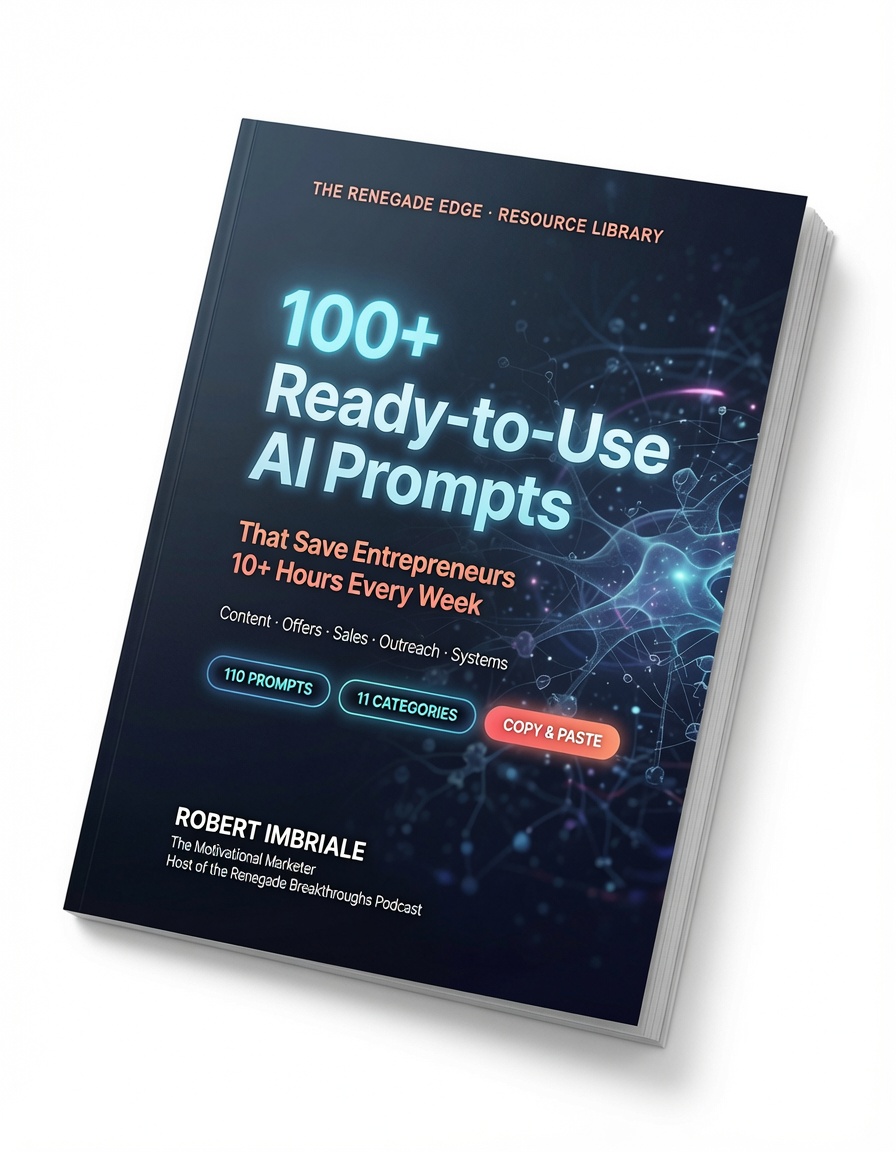
This is for you if you’re an entrepreneur, coach, consultant, or creator who:
– Wears too many hats and never has enough hours in the day
– Knows AI *should* be saving you time but hasn’t cracked how
– Would rather spend your energy on the work only you can do – not on writing every email, caption, and offer from scratch
If that’s you, this library was built for exactly where you are right now!
Free instant access. No credit card, no catch.
The post The Trust Recession appeared first on Robert Imbriale.
